


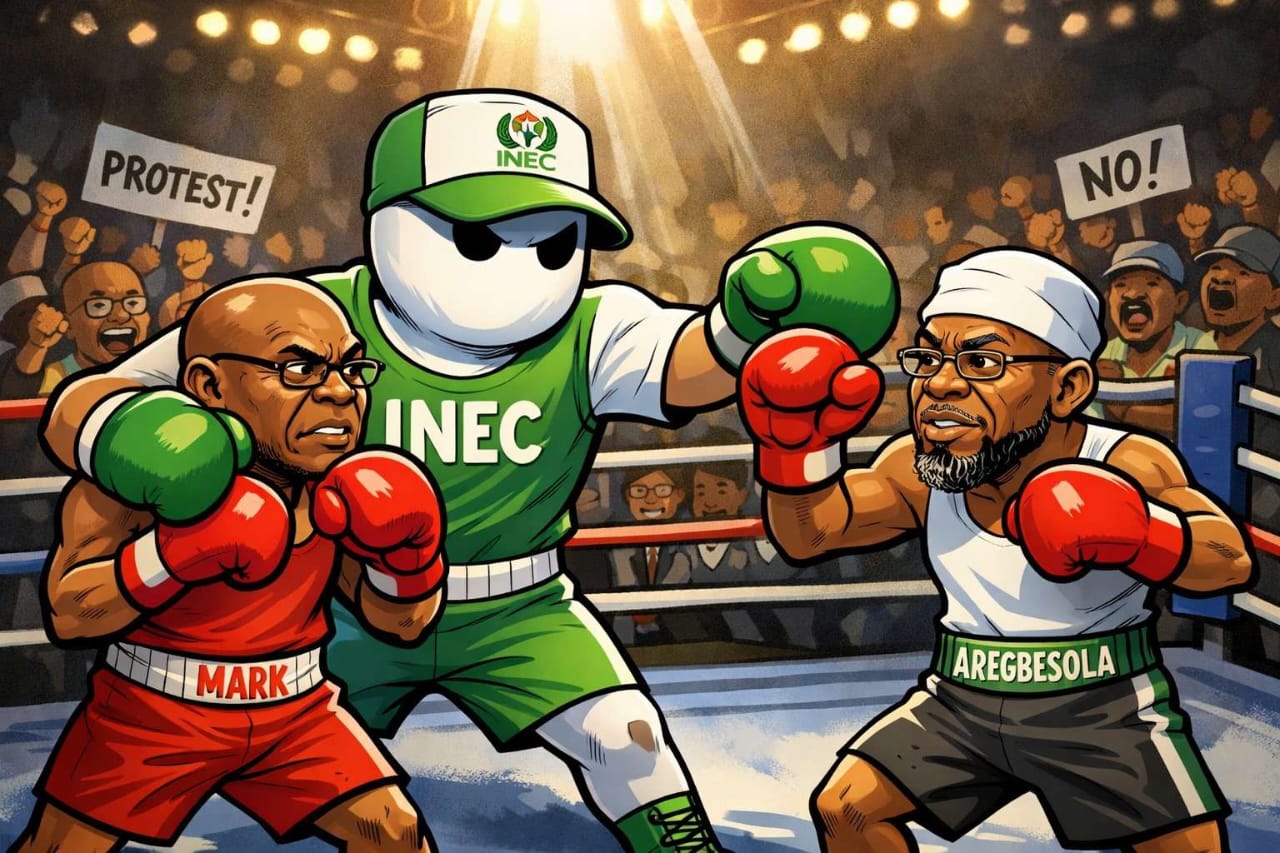
Nigeria’s political space heated up on Wednesday after the Independent National Electoral Commission (INEC) made a controversial decision that has sparked strong reactions from key political figures and parties.
The electoral body officially declined to recognise David Mark and Rauf Aregbesola in their reported leadership positions within the African Democratic Congress (ADC), triggering outrage across opposition circles.
What Happened?
INEC announced its decision through a statement issued by Mohammed Haruna, the National Commissioner and Chairman of the Information and Voter Education Committee.
According to the commission, the decision was influenced by conflicting legal communications regarding the leadership of the ADC.
INEC revealed that it received a letter from Suleiman Usman SAN & Co., advising the commission not to recognise Nafiu Bala Gombe as the acting National Chairman of the party due to an ongoing court case — Suit No. FHC/ABJ/CS/1819/2025.
At the same time, Summit Law Chambers sent a counter-letter urging INEC to enforce a Court of Appeal judgment, which they claim validates Gombe’s leadership. The legal firm also attached a Certified True Copy of the appellate court’s ruling in Suit No. CA/ABJ.
Caught between two opposing legal directives, INEC opted to take a cautious stance, effectively withholding recognition pending clarity from the courts.
Political Parties Push Back
The decision did not sit well with major opposition parties.
Spokespersons of the Peoples Democratic Party (PDP) and ADC quickly reacted, criticizing INEC’s move and questioning its neutrality.
They argued that the commission’s decision appears selective and may be influenced by external political pressure. Some party officials went as far as alleging that the ruling All Progressives Congress (APC) could be playing a behind-the-scenes role in the unfolding situation — a claim that has yet to be substantiated.
The ADC, in particular, expressed concern that the decision undermines internal party processes and could destabilize its structure ahead of future elections.
Peter Obi Weighs In
Former presidential candidate Peter Obi also joined the conversation, lending his voice to growing concerns about democratic integrity in Nigeria.
Obi reportedly called for transparency and fairness in the electoral process, emphasizing that institutions like INEC must remain independent and free from political interference to maintain public trust.
Why This Matters
This development highlights ongoing tensions within Nigeria’s political system, especially regarding party leadership disputes and the role of regulatory bodies like INEC.
By refusing to take a definitive stance, INEC may be trying to avoid legal complications. However, critics argue that such neutrality could create confusion and deepen internal crises within political parties.
The situation also raises broader questions about how electoral institutions handle legal conflicts and whether their decisions are always perceived as impartial.
What Comes Next?
For now, all eyes are on the courts. The final resolution of the leadership dispute within the ADC will likely depend on ongoing legal proceedings.
Until then, INEC’s position remains cautious — but the political backlash shows that the issue is far from settled.
As Nigeria moves closer to future elections, decisions like this could play a significant role in shaping party dynamics, alliances, and voter confidence.


