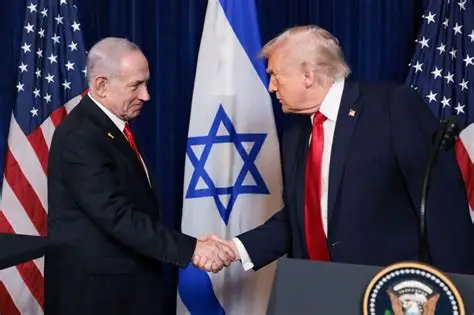
Israeli Prime Minister Benjamin Netanyahu is set to meet U.S. President Donald Trump as the two leaders prepare to discuss Iran, regional security, the ongoing war and efforts to expand the circle of peace across the Middle East.
Israeli Prime Minister Benjamin Netanyahu has described his planned meeting with U.S. President Donald Trump as both a “great privilege” and a “great responsibility,” highlighting the importance of the discussions as tensions continue to shape the political and security landscape of the Middle East.
Netanyahu made the remarks before departing Israel on Monday for his meeting with the American president. According to the Israeli prime minister, the talks will cover a range of issues affecting Israel and the wider region, with Iran expected to be one of the most important subjects on the agenda.
“This is a great privilege, but it is also a great responsibility,” Netanyahu said before leaving Israel.
“We will discuss all the issues on the agenda, first and foremost Iran. Naturally, our goal is to safeguard our security and also to expand the circle of peace around us,” he added.
The planned meeting between Netanyahu and Trump comes at a critical time for the Middle East, with Iran remaining a major concern for Israel and the United States. The two countries have continued to closely monitor Iran’s regional activities and its broader security posture, making the issue a central part of discussions between Washington and Jerusalem.
Netanyahu’s comments suggest that Israel intends to use the meeting to strengthen its security relationship with the United States while also discussing ways to advance peace and stability in the region.
However, the relationship between Netanyahu and Trump has not always been free of disagreements. Trump has previously described Netanyahu in an interview as a “very difficult guy,” a comment that drew attention to the sometimes complicated relationship between the two political leaders.
Despite such remarks, Netanyahu has attempted to downplay the differences between them, describing any disagreements as “tactical disagreements” rather than major divisions over their shared strategic objectives.
The Israeli prime minister said that, despite differences in approach, he believes the two leaders remain largely united on the major goals surrounding Israel’s security and the ongoing war.
“I think that the main issue… is to show the world, to show Iran, and also even Lebanon and others… that there is no break or any kind of major disagreement between the United States and Israel,” Netanyahu told AFP.
“There’s more in agreement between the two leaders than disagreement,” he added.
The statement appears aimed at sending a message of unity to both allies and adversaries. With the Middle East facing continued instability, Netanyahu’s comments emphasize the importance of maintaining a strong alliance between Israel and the United States.
The meeting is also expected to draw international attention because of the broader implications of U.S.-Israel cooperation. Any discussions concerning Iran could have consequences for the security calculations of countries across the Middle East, particularly those concerned about regional tensions and the possibility of further conflict.
Beyond Iran, Netanyahu and Trump are expected to discuss other issues on the regional agenda, including the ongoing war, Israel’s national security priorities and efforts to expand the circle of peace between Israel and other countries in the region.
The two leaders’ meeting could also provide an opportunity to clarify their respective positions on the future direction of the Middle East. While Israel has repeatedly emphasized the need to protect its national security, the United States has also been involved in broader diplomatic efforts aimed at reducing tensions and encouraging regional cooperation.
For Netanyahu, the meeting represents an opportunity to reinforce Israel’s relationship with Washington and demonstrate that the two governments remain closely aligned on key strategic matters.
For Trump, discussions with the Israeli prime minister could provide an opportunity to assess the current situation in the region and explore possible diplomatic and security strategies involving Iran and other regional actors.
As the meeting approaches, attention will remain focused on what the two leaders say publicly and whether their discussions lead to any significant announcements or policy changes.
The outcome could influence the direction of U.S.-Israel relations and shape conversations about security and peace in the Middle East in the months ahead.
For now, Netanyahu’s message is clear: despite tactical differences and occasional disagreements, he believes the relationship between Israel and the United States remains strong.
“There’s more in agreement between the two leaders than disagreement,” Netanyahu said, signaling his intention to present a united front with Trump as they address some of the most pressing challenges facing Israel and the wider Middle East.
Key Issues Expected at the Netanyahu-Trump Meeting
The meeting is expected to focus on several major issues, including:
- Iran and its regional influence
- Israel’s national security
- The ongoing war and regional stability
- U.S.-Israel relations
- Security concerns involving Lebanon and other regional actors
- Efforts to expand the circle of peace in the Middle East
The discussions between Netanyahu and Trump will therefore be closely watched by governments, diplomats and observers around the world as they seek to understand the future direction of U.S. policy toward Israel, Iran and the wider Middle East.